Lava caves are tunnels created by flowing lava.
The outer surface of a lava flow cools and hardens while molten lava continues moving underneath. When the supply decreases and the lava drains away, an empty passage can remain. Some Mount Etna lava caves can be visited with suitable equipment and careful route selection.
Stepping inside a Mount Etna lava cave feels like entering another world.
Just a few moments after leaving the bright Sicilian sunshine behind, the temperature drops, the light disappears and you are surrounded by walls of solidified lava shaped by one of Europe’s most active volcanoes.
These underground tunnels are among Mount Etna’s most fascinating natural features. They are not man-made caves or ancient mines, but channels left behind by rivers of molten lava during past eruptions.
During many of my hiking tours, visiting a lava cave becomes one of the most memorable moments of the day. It allows visitors to discover a hidden side of the volcano that many people never imagine exists.
What Is a Lava Cave?
A Mount Etna lava cave, also called a lava tube, is a natural tunnel created during a volcanic eruption.
When fluid basaltic lava flows downhill, its outer surface cools first because it is exposed to the air. This creates a solid crust, while the lava underneath continues flowing like a river.
When the eruption gradually ends, the molten lava drains away, leaving behind an empty tunnel beneath the hardened surface.
Unlike limestone caves, lava tubes are not formed by water slowly dissolving rock. They are created directly by a moving lava flow, making them one of the most distinctive landforms of volcanic environments.
How Does a Lava Tube Form?
The basic mechanism is surprisingly easy to understand. Imagine a river of molten lava moving down the volcano during an eruption.
- Lava begins to flow downhill.
- The surface cools when it comes into contact with the air.
- A solid roof develops while molten lava continues moving below it.
- As the eruption weakens, the lava supply decreases.
- The remaining lava drains away and an empty tunnel is left behind.
What remains is a natural underground passage that preserves the route once followed by the lava. Entering one offers a completely different perspective: instead of observing a lava field from above, you are walking through a channel that once carried incandescent rock.
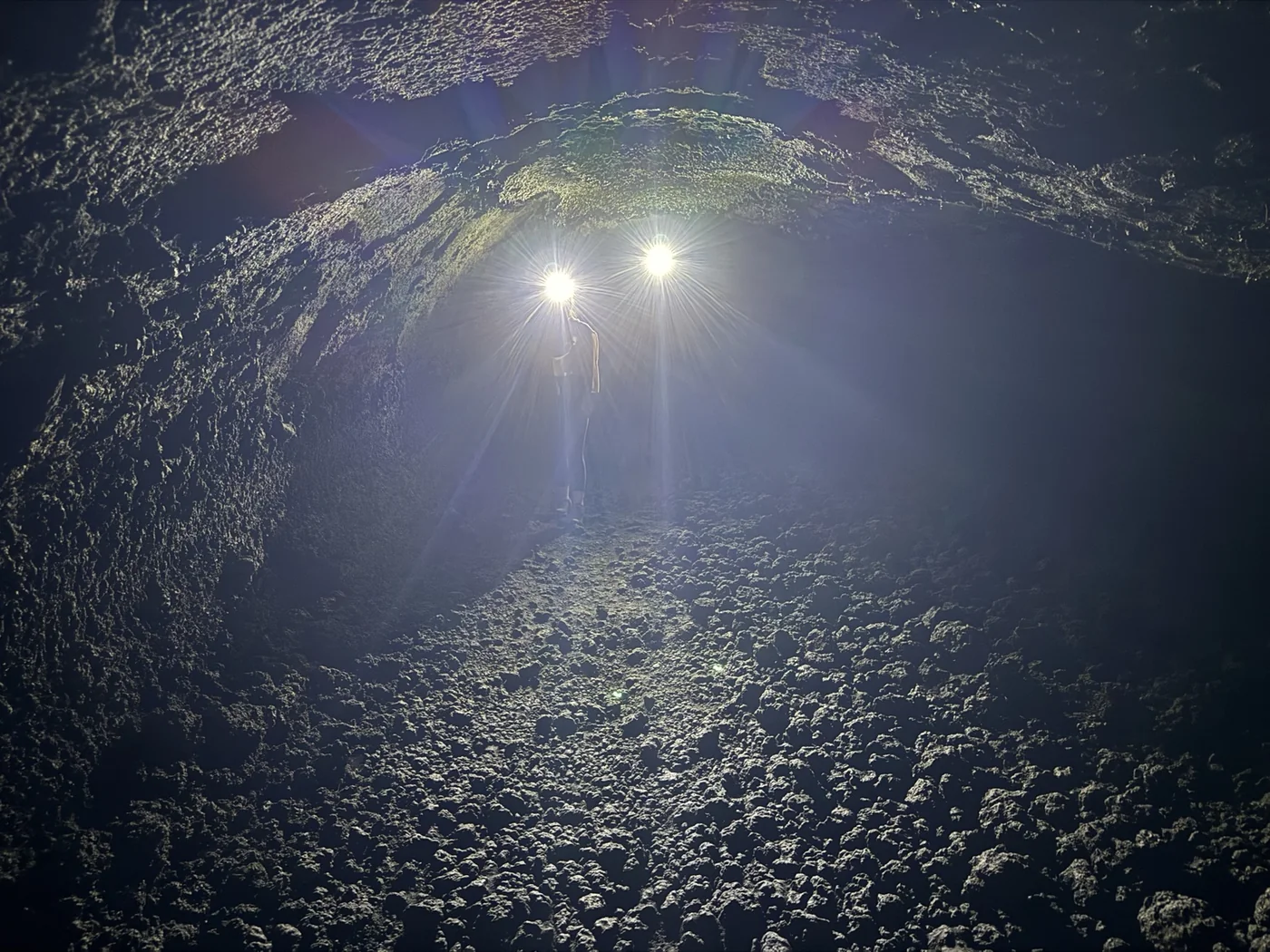
Why Are Mount Etna Lava Caves Important?
Lava caves are much more than fascinating underground tunnels. They preserve evidence of how lava moved and cooled during past eruptions.
For geologists and volcanologists, their shape and internal surfaces can help reveal the behaviour of a lava flow. For visitors, they make a process that happened beneath the surface visible and understandable.
Every cave is different. Some are short and relatively accessible, while others are longer, narrower or more technically demanding. Their dimensions and internal features depend on the eruption and the way the lava moved through the landscape.
Can You Visit Mount Etna Lava Caves?
Yes, some lava caves on Mount Etna can be visited, but not all of them are equally accessible or suitable for every visitor.
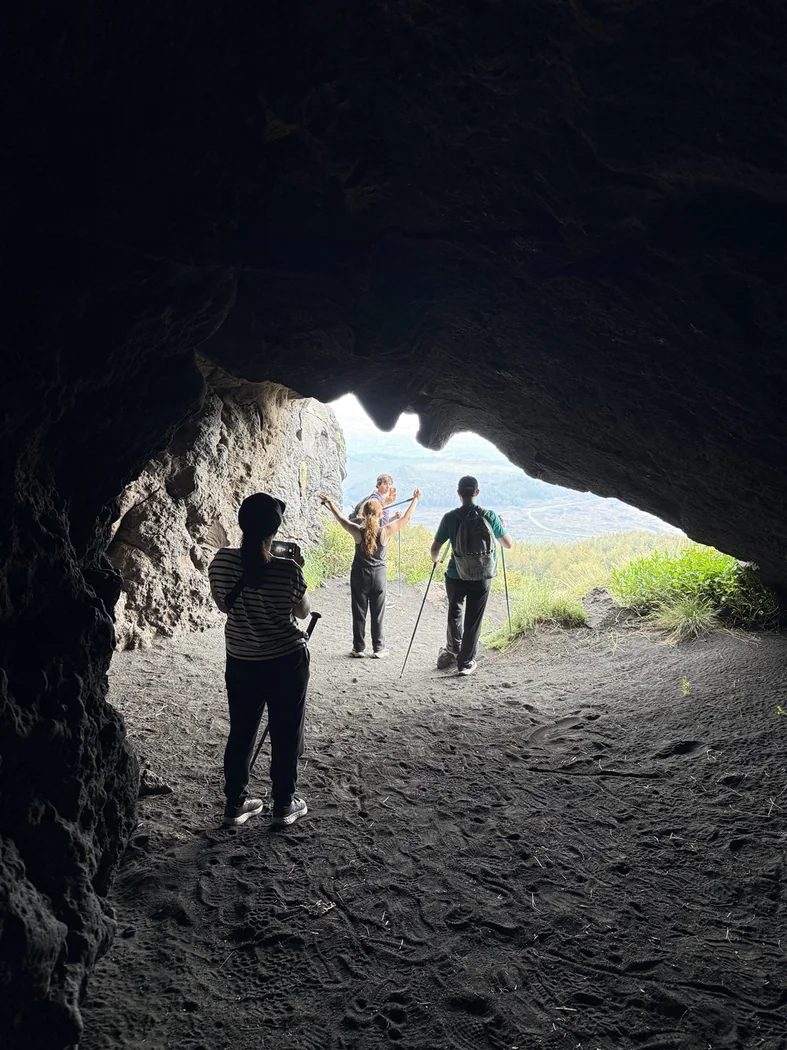
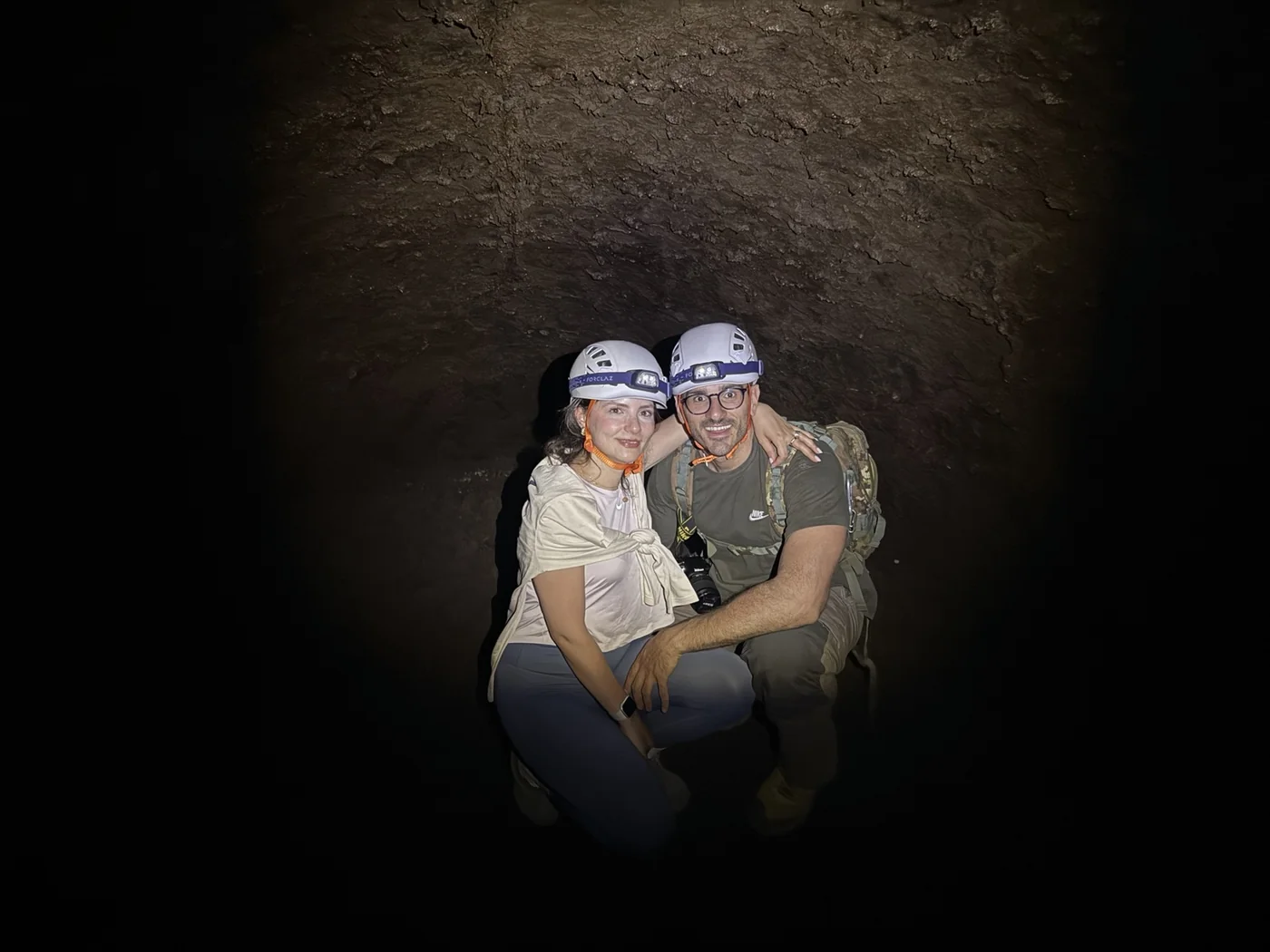
During a visit, a protective helmet and headlamp are normally used. The ground can be uneven, ceilings may be low and volcanic rock can be sharp, so suitable footwear and careful movement are important.
A guide does more than help with access. Explanations make it possible to recognise the features of the tunnel, understand how it formed and connect the cave with the surrounding lava flow and eruption history.
What Will You See Inside?
Every lava cave is different, but they often preserve visible traces of the lava that once flowed through them.
You may notice smooth or rippled surfaces, small ledges marking former flow levels, irregular ceilings and textures that suggest the direction of movement. Colours can range from deep black to brown, reddish and metallic tones depending on the rock, minerals and surface alteration.
The atmosphere is quiet, cool and unexpectedly peaceful. Without daylight, your attention shifts to the shape of the tunnel and to the remarkable idea that the empty passage was once filled with molten lava.
The moment visitors enter the cave
One of my favourite moments during a hike is watching visitors enter a lava cave for the first time.
Outside, they are surrounded by bright sunlight, forests and wide volcanic landscapes. Just a few steps later, everything changes: the temperature drops, the light fades and silence takes over.
Many people instinctively lower their voices. Not because they are afraid, but because they realise they are standing inside a tunnel created by flowing lava during one of Mount Etna’s eruptions.
For many visitors, this is the moment when Etna becomes much more than a mountain. It becomes a living volcano whose history can still be read beneath their feet.
Frequently Asked Questions
Are Mount Etna lava caves natural?
Yes. They are natural formations created when the surface of a lava flow hardens while molten lava continues flowing underneath and later drains away.
Are Mount Etna lava caves safe to visit?
Some can be visited safely when conditions are suitable and visitors use appropriate equipment. The accessibility and difficulty depend on the individual cave.
Are lava caves cold?
They normally feel cooler than the outside environment and maintain a more stable underground temperature throughout the year.
Can children visit a lava cave?
Some accessible caves may be suitable for children. The decision depends on the cave, the route, current conditions and the child’s age and confidence.
Do all Mount Etna hikes include a lava cave?
No. It depends on the itinerary, although many routes on the northern side can include a lava cave visit.
Explore Mount Etna With Me
Exploring a lava cave is an opportunity to understand how Mount Etna shaped its landscape and to experience the volcano from the inside.
My Etna Easy Tour, Etna Morning or Sunset Hike and Etna Advanced Hike (Full-day) are designed for different fitness levels and can include the exploration of a lava cave when the chosen itinerary and conditions allow it.
Ask Roberto about your hike